Showing posts with label Gowanus Canal. Show all posts

Wednesday, January 23, 2013

Gowanus Canal Clean-up Estimated btw. $467 - $504 Mil. - City's Share Growing- IBO

gowanus
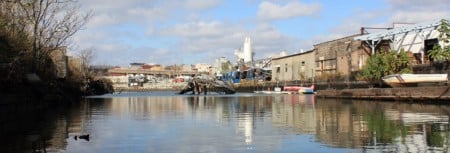
The Gowanus Canal.  In March 2010 the federal Environmental Protection Agency declared the 1.8 mile Gowanus Canal a Superfund site, a designation the Bloomberg administration vigorously opposed.  

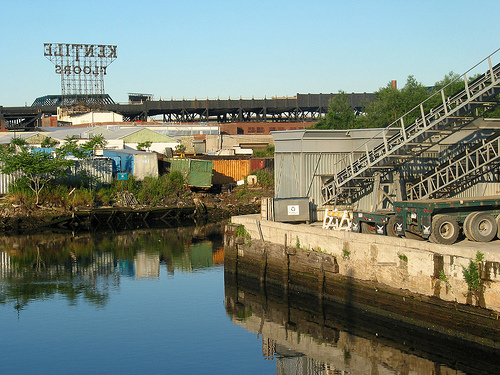
The EPA set about developing a plan to contain the hazardous materials in the canal’s sediment and to prevent recontamination. Part of the Superfund process also includes determining who’s responsible for creating the environmental mess and making those responsible pay the cost of alleviating the conditions.   Photo: Flikr/Doug Turetsky


As of this month the EPA has sent notices of potential liability to thirty-one companies, and several governmental entities including New York City, the US Navy, the US Postal Service, the US General Services Administration, the US Maritime Administration and the former owner of a company.  The companies included Consolidated Edison, Mobil Oil Corp, Citigroup, Verizon, ConocoPhillips Co, Chemtura Corp, Cibro Petroleum Products.


In December 2010 a EPA judicial bankruptcy deal approved a $3.9 million settlement 

with Argus Chemical Co., Witco Chemical Co., Crompton Corp.)  


Brooklyn


For decades, the Gowanus Canal has been synonymous with a polluted, and sometimes stinking, body of water. Soon after the Gowanus opened in the 1860s, it was generally treated as an open sewer. Industrial waste from coal yards, refineries, and tanneries as well as raw sewage poured into the canal. This fetid stew contained hazardous substances such as PCBs and polycyclic aromatic hydrocarbons, pesticides, and heavy metals such as mercury, copper, and lead.

Fast forward to March 2010 when the federal Environmental Protection Agency declared the 1.8 mile Gowanus Canal a Superfund site and set about developing a plan to contain the hazardous materials in the canal’s sediment and to prevent recontamination. Part of the Superfund process also includes determining who’s responsible for creating the environmental mess and making those responsible pay the cost of alleviating the conditions.
The EPA is still determining who is responsible and the degree of their culpability. Some of the companies being investigated may not be surprising, such as National Grid and Consolidated Edison. But based on the agency’s review so far and the remedies proposed in a plan released late last month, one of the entities on the hook for footing the cleanup bill may be the city itself.
The federal environmental agency estimates that its preferred plan (there are also some alternatives) would cost in the range of $467 million to $504 million. New York City’s share of that cost could be substantial, according to The Independent Budget Office (IBO).
For years, the city has allowed sewage and stormwater to spew into the canal. Looking just at the period from 1952 until the Red Hook Wastewater Pollution Control Plant opened in 1987, the city dumped about 20 million gallons of sewage a day into the Gowanus. The Red Hook plant and the nearby Owl’s Head wastewater plant still send sewage and stormwater into the canal when there’s an appreciable amount of rain and the two plants exceed their capacity for treating the wastewater. In a September 2011presentation, the city’s Department of Environmental Protection estimated that about 300 million gallons of stormwater and sewage drained into the canal in a typical year, about two-thirds of it untreated sewage.
To reduce the continued contamination of the canal from what are called combined sewer overflows, or CSOs, the EPA wants the city to build holding tanks that will store the wastewater until the two treatment plants have sufficient capacity to handle much of the excess. The EPA estimates the cost of the tanks to be about $78 million.
A general reading of the EPA’s proposed cleanup plan and some other documents gives the impression that the city’s share could include more than the cost of the tanks as the federal agency sorts out who is responsible for various aspects of the canal’s pollution. Much of the heavy industrial uses along the canal ended long ago. National Grid owns the three sites where plants produced manufactured gas from coal, oil, and water to be used for street lights and home heating. These plants appear to be a significant source of the canal’s past pollution and may lead the utility to also bear a heavy share of the remediation costs. But the EPA’s extensive discussion of the role of CSOs in the canal’s past and future may be indicative of the extent to which federal officials believe the city should be underwriting the cleanup.
Any spending due to the Superfund plan comes on top of substantial sums the city has already been investing to improve the water quality of the Gowanus and reduce CSOs. Based on a review of capital budget spending by IBO environmental analyst Justin Bland, over the past 12 years the city has invested nearly $160 million to repair and upgrade a flushing tunnel that helps oxygenate the canal’s relatively stagnate water and an additional $18 million on other Gowanus cleanup-related environmental projects. The city plans to commit an additional $51 million for these projects over the next four years.
The Bloomberg Administration strenuously opposed the federal Superfund designation and developed its own plan for restoring the Gowanus. The Mayor argued that the Superfund designation could cause years of legal battles and delay redevelopment of the surrounding area. But City Hall’s plan relied in part on Congressional appropriations for the canal, funds that the EPA’s regional administrator considered far from certain. Insufficient funding could mean a lag in the cleanup.
The EPA is holding public meetings in Brooklyn on its plan on January 23 at PS 58 and January 24 at the Joseph Miccio Community Center. Written comments until March 28.
Read More:

Federal Plan for Cleanup of the Gowanus Canal May Mean Growing Costs for the City

IBO - January 23, 2013 - By Doug Turetsky

Thursday, February 3, 2011

Fed's Gowanus Canal Study Underlines Severity of Pollution

The agency has scheduled a public meeting to discuss the findings on Feb. 23 from 6:30 to 9 p.m. at Public School 32 in Brooklyn. A draft report of the results of the investigation is at epa.gov/region02.

Officials at the federal Environmental Protection Agency (EPA) on Wednesday released results a year-long study of the Gowanus Canal. Tests of water, sediment and tissue from fish like striped bass and white perch showed heavy contamination from a combination of industrial and sewage discharges, some of which continue. The EPA named it a Superfund site last March over the objections of the Bloomberg administration. The cleanup, which officials at the agency said would surely involve major dredging, is expected to start by 2015 and last 10 to 11 years, at an estimated cost of $300 million to $500 million, to be paid for by polluters. (Photo: Damon Winter/The New York Times)

Brooklyn

A yearlong investigation of the Gowanus Canal in preparation for its cleanup under the federal Superfund program has confirmed the severe extent of its contamination and the threat it poses to public health, particularly for people who eat fish from it or have repeated contact with its water or sediment, according to the New York Times.

Officials at the federal Environmental Protection Agency on Wednesday released the results of its study of the canal, which was named a Superfund site last March over the objections of the Bloomberg administration.

The cleanup, which officials at the agency said would surely involve major dredging, is expected to start by 2015 and last 10 to 11 years, at an estimated cost of $300 million to $500 million, to be paid for by polluters.

Tests of water, sediment and tissue from fish like striped bass and white perch showed heavy contamination from a combination of industrial and sewage discharges, some of which continue, federal officials said. The canal, in Brooklyn, is polluted with more than a dozen contaminants, including suspected carcinogens like polychlorinated biphenyls, or PCBs; metals like mercury, lead and copper; and debris, including sunken vessels.

For more than a century after it was carved out of tidal wetlands and streams in the 1860s, the Gowanus served as a teeming route for oil refineries, chemical plants, tanneries, manufactured-gas plants and other heavy industry along its banks.

Most of the industrial traffic has faded since the 1960s, although waste still flows into the canal, and it is used by some businesses and recreational boaters from neighborhoods near it, including Park Slope, Cobble Hill, Carroll Gardens and Red Hook.

The most prevalent pollutant in the canal, officials said Wednesday, is a group of chemicals known as P.A.H.’s, for polycyclic aromatic hydrocarbons, another suspected carcinogen. They are formed during the incomplete burning of coal, oil, gas, wood, garbage and other organic substances, and were found mostly near former manufactured-gas plants along the canal.

In a telephone conference call with reporters, the environmental agency’s regional administrator in New York, Judith A. Enck, repeated warnings that people should not swim in the canal or eat fish from it. While boating should not be restricted, Ms. Enck said, recreational users should avoid coming in contact with the water.

“What we found is no surprise,” she said. “The report paints a pretty serious picture of the level of contamination.”

Ms. Enck said the contamination was so severe that she was not ready to say whether the Gowanus would ever be “swimmable and fishable.” On a positive note, she said air samples from around the canal did not reveal contamination above “acceptable” safety standards.

In opposing the designation of the Gowanus as a Superfund site, the Bloomberg administration had argued that the label could set off legal battles with polluters, prolong the dredging operation and scare off developers. It proposed its own cleanup plan.

Read More:

Gowanus Canal Inquiry Underlines Severity of Pollution
New York Times - February 2, 2011 - By Mireya Navarro

Thursday, November 11, 2010

Feds Identify Gowanus Canal “Hot Spots” Of Intense Contamination

The Gowanus Canal remains a mess — and three former gas plants are the main villain. Coal tar continues to migrate into the waterway producing cancer-causing vapors. (Photo: Kate Emerson/ The Brooklyn Paper)

Brooklyn

Federal officials have identified three “hot spots” of intense contamination — and the source of cancer-causing toxic vapors — along the polluted Gowanus Canal, according to the Brooklyn Paper.

The officials remained mum last week about what risks the gunk poses to humans and animals — but they did reveal that an astonishing 90 percent of pollutants in the canal originate from just three sites along the 1.8-mile waterway.

he terrible trio mirrors locations where gas plants once stood: Metropolitan Works, at 12th Street and the canal; Fulton Municipal Works, at Degraw Street and Third Avenue; and Citizens Gas Company, at Smith and Fifth streets.

From the 1860s to the late 1950s, the companies literally helped fuel the Industrial Revolution — but in the process, generated a by-product called coal tar, a substance containing an array of hazardous compounds.

The foul tar has since seeped deep underground, where it continues to migrate into the fetid waterway, its presence confirmed by an oily surface sheen. The tar can also be gasified, producing cancer-causing vapors.

The agency is sifting through a mountain of data it collected since the canal was named a Superfund site last March, a recognition of its status as one of the nation’s most polluted waterways. Once that work is completed, said Walter Mugdan, a regional director with the Environmental Protection Agency, officials will “determine what to do to clean it” — a process that will take 10 to 12 years, and cost $500 million.

Read More:

The Brooklyn Paper - November 8, 2010 - By Gary Buiso


Tuesday, March 2, 2010

Gowanus Canal Receives EPA Superfund Designation - Blow To Bloomberg Administration


Trash and raw sewage overflow into the canal when the city's sewer system is overwhelmed by heavy precipitation. Photo: Damon Winter/The New York Times

BROOKLYN

The Environmental Protection Agency designated the Gowanus Canalin Brooklyn a Superfund site on Tuesday and announced plans to clean up more than a century’s worth of noxious pollutants there, according to the New York Times.

The decision ended a contentious debate and was a blow to the Bloomberg administration, which had proposed a cleanup without such a designation. The city had argued that the label could set off legal battles with polluters, prolong the dredging operation and spook developers leery of the stigma of a Superfund listing.

But in a conference call with reporters, Judith A. Enck, the E.P.A. administrator for the region, said the Superfund designation would guarantee the best result for residents and the environment and ensure that the polluters cover all the costs.

“We believe that it would get us the most efficient and comprehensive cleanup,” Ms. Enck said.

From Gowanus Bay to New York Harbor, the agency has found contamination along the entire length of the clouded 1.8-mile canal in a preliminary assessment, including pesticides, metals and the cancer-causing chemicals known as PCBs.

The agency estimates that the project will last 10 to 12 years and cost $300 million to $500 million. The city estimated that its approach would take nine years.

Read More:
Gowanus Canal Gets Superfund Status
New York Times - March 2, 2010 -  By Mireya Navarro


Gowanus Canal
Photo credit: Josh Verleun

The federal Environmental Protection Agency put the Gowanus Canal on its list of Superfund sites on Tuesday. The 1.8-mile canal in the midst of Brooklyn has been contaminated by heavy industry over the last century. Now the feds are stepping in for the big clean-up. The decision is controversial and will have many repercussions according to The Brooklyn Ink.

Lenore Cho and Sudip Mukherjee delved into the discussion and found out who is for the Superfund declaration and who is against it and what their reasons are.

Pro Superfund:

Clean water activists, community groups and local politicians rejoiced about the declaration, which will likely require extensive clean-up over the next dozen years.

Riverkeeper, a New York watchdog group that studies polluted waterways, has long been an advocate of federal intervention at the canal. Josh Verleun, the group’s attorney and chief investigator, said the Superfund label is extremely helpful because it requires chief polluters named by the E.P.A. to pay for the cleanup activities.

“The E.P.A. can bring these companies to the table and make them financially responsible for their contaminants,” Verleun said. “The Gowanus Canal is a very contaminated site, in need of a complex, expensive remediation. Forcing big-time polluters to pay for their mistakes lightens the burden on federal funding.”

Verleun also worked with various neighborhood groups that strongly supported the idea of Superfund status for the canal, and said 85 percent of the respondents to the E.P.A.’s survey of residents living nearby said they approved of the idea.

One local group, called the Urban Divers Estuary Conservancy, works to promote community knowledge of, and participation in, the maintenance of the city’s coastal waters. For years, the group has worked with interested residents and area college professors to study the canal, including ways to clean up all the toxic pollution.

“We are very happy with the outcome and think the Superfund (designation) is the beginning of a pathway that leads to a cleaner, better Gowanus Canal,” said Ludger Balan, executive and environmental program director of the Urban Divers.

According to Balan, the waters in the canal are so contaminated that the bulkhead and land surrounding the canal are becoming eroded. Additionally, because of excess water and sewage pooled in the canal, there is more harmful bacterial content in the Gowanus than in any other body in New York City. “The Superfund will bring real efforts to controlling a dangerous problem in Brooklyn,” he said.

Read More:

The Brooklyn Ink - March 2, 2010 - By Lenore Cho and Sudip P. Mukherjee 


Press Release - March 2, 2010 

CONTACT:

Tina Posterli, Riverkeeper, 914-478-4501 x 239

FOR IMMEDIATE RELEASE:

Tarrytown, NY – March 2, 2010 – Riverkeeper, New York’s leading clean water advocate, today commended the Environmental Protection Agency’s decision to list Brooklyn’s toxic Gowanus Canal on the Superfund National Priorities List. The decision to list the canal will begin a comprehensive effort by the federal EPA to remove 150 years of contamination from the Canal’s murky bottom and to address sites along the Canal’s banks that continue to leach pollution into the waterway.

“After 150 years of abuse and neglect the Gowanus Canal will finally get the comprehensive cleanup that the residents of the area deserve,” stated Josh Verleun, Riverkeeper Attorney & Chief Investigator.

“The toxic legacy of coal tar, PCBs, pesticides, and other contamination of the Gowanus can only be cleaned through a comprehensive Superfund cleanup; we are gratified to see the EPA stepping up to this task.”

Riverkeeper has been a vocal advocate for a Superfund cleanup for the Gowanus since the EPA announced that it was considering the Canal for the federal Superfund program in April, 2009. After reviewing an alternative Gowanus cleanup plan put forth by New York City and determining that it was inadequate, Riverkeeper filed comments with the EPA in support of Superfund, joined with community groups to rally support for Superfund from EPA and elected officials, and launched a letter writing campaign in support of the designation.

Riverkeeper’s efforts to support Superfund are part of a larger focus on halting ongoing pollution of the Gowanus Canal. In September, 2009 Riverkeeper launched a pollution enforcement initiative on the Canal filing three Notices of Intent to Sue against environmental law breakers and sent a warning to another. Violations included dumping of scrap metal and debris into the canal; discharge of liquid cement and stone aggregate; and illegal operation of an open dump. Riverkeeper has also increased boat patrols and water quality testing of the Canal and has established partnerships with law enforcement and other agencies to combat ongoing pollution.

http://www.riverkeeper.org/news-events/news/riverkeeper-commends-epa-decision-for-comprehensive-superfund-cleanup-of-toxic-gowanus-canal/